
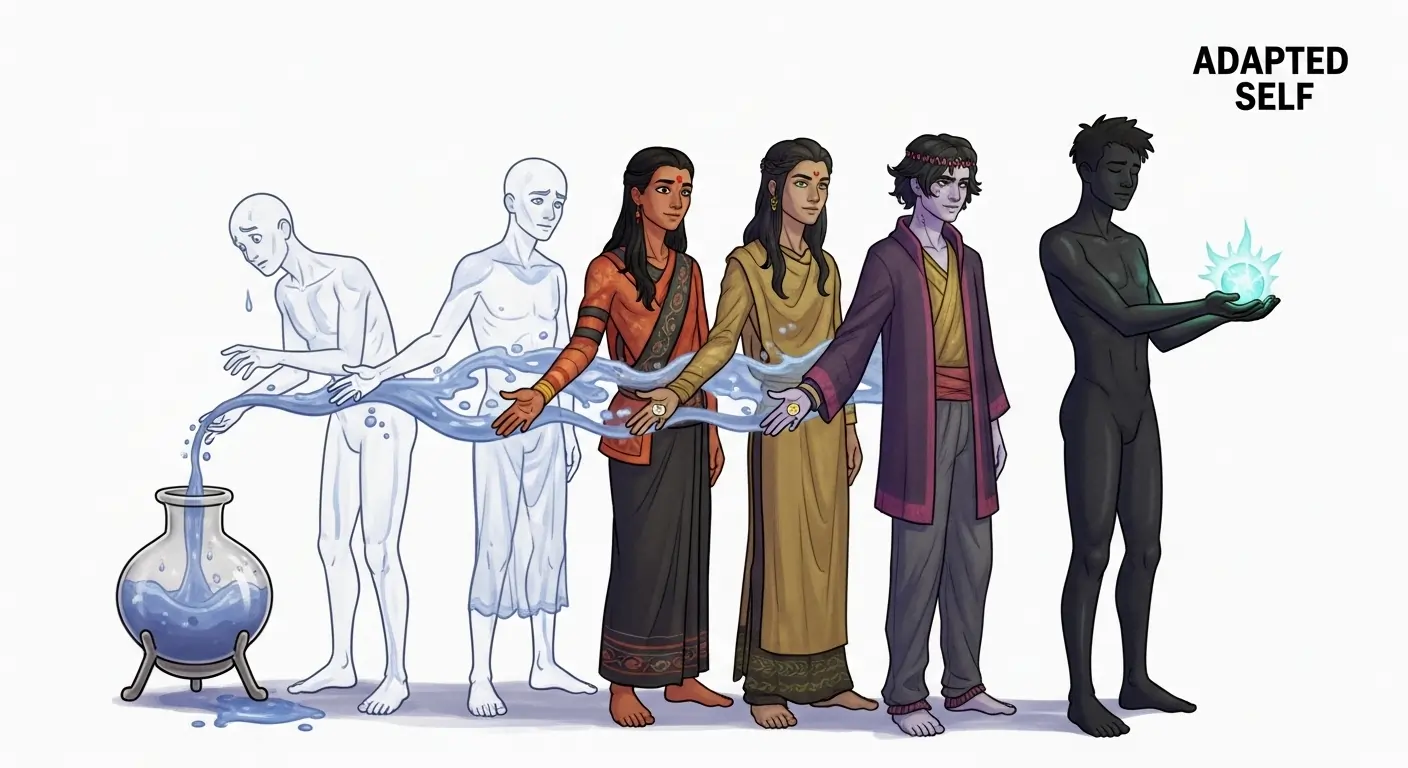
In the grand tapestry of human history, few concepts are as misunderstood, yet as fundamentally human, as Assimilasjon. To the casual observer, it might seem like a simple matter of “fitting in”—learning a new language, wearing the local clothes, and adopting a new set of holidays. However, beneath the surface lies a profoundly complex interplay of forces that shape how individuals and societies evolve.
Assimilasjon is more than just a word; it is a powerful concept that explains the invisible architecture of belonging. Whether through the lens of immigration, the blending of cultural traditions, or the mastery of a new social code, this process plays a key role in how we define identity and community. In today’s globalized world, understanding this process is essential for navigating diversity and fostering true inclusion.


Defining the Concept: Beyond the Surface
To truly understand assimilation, we must first strip away the political baggage and look at its core definition. Derived from the Latin assimilare, meaning “to make similar,” the term describes the process by which a minority group or individual gradually adopts the customs and attitudes of a prevailing culture.
The Three Dimensions of Assimilation
Sociologists often break the process down into three distinct layers:
- Structural Assimilation: This is the “functional” side of the process. It involves gaining entry into the primary institutions of a society—the labor market, the education system, and the political arena.
- Cultural Assimilation: This involves the adoption of the “software” of a society—its values, religion, social norms, and daily habits.
- Marital/Social Assimilation: This occurs when the social barriers between the minority and majority groups vanish entirely through intermarriage and deep-seated social networks.
The Linguistic Pillar: The Soul of the New Identity
Language is the primary vehicle for human connection. It is the “first door” through which any individual must pass to enter a new society. However, linguistic assimilation is rarely just about vocabulary; it is about the transformation of the self.
From Survival to Expression
For a newcomer, the first stage of linguistic assimilation is survival. It is the ability to navigate a grocery store or a doctor’s office. But as the process deepens, it moves into expression. This is the stage where an individual learns the humor, the metaphors, and the “unspoken” rhythm of a language.
The Bilingual Heart
One of the most complex risks of this pillar is the loss of the “mother tongue.” When a second generation prioritizes the dominant language for professional success, they often lose the specific cultural nuances that only their original language could provide. The modern challenge is to advocate for additive assimilation—where the new language is a tool added to the belt, rather than a replacement for the original voice.
The Cultural Interplay: The Friction and the Fusion
Culture is the invisible “rhythm” of a society. Assimilation is the process of learning to dance to that rhythm. But culture is not a static monolith; it is a living, breathing entity that changes even as it is being adopted.
Navigating Social Norms
Every culture has a set of “unwritten rules.” In a Nordic context, this might involve the nuances of dugnad (community work) or specific social etiquettes regarding privacy and directness. Mastering these norms is essential for reducing the “friction of otherness” and building trust within a community.
The “Melting Pot” vs. The “Cultural Mosaic“
Societies take different approaches to this interplay:
- The Melting Pot: Traditionally associated with the USA, this model suggests that all cultures should blend into one single, unified national identity.
- The Cultural Mosaic: Associated with Canada, this model encourages a society where different cultures coexist like tiles in a mosaic—each keeping its color while contributing to a larger picture.
Understanding which model a society follows is crucial for navigating the expectations placed on the individual.
Historical Perspectives: The Lessons of the Past
We cannot talk about assimilation without acknowledging its darker history. When the process is voluntary, it offers opportunities for growth. When it is forced, it leads to trauma.
The Norwegianization Policy (Fornorskingspolitikken)
In Norway, the historical treatment of the Sámi, Kven, and Romani people provides a stark lesson. For over a century, the state implemented policies designed to “erase” these minority cultures in favor of a singular Norwegian identity.
- The Mechanism: Boarding schools, language bans, and social pressure.
- The Result: A profound loss of heritage and intergenerational trauma that the nation is still working to reconcile today.
This history teaches us that true inclusion cannot be built on a foundation of erasure. It must be built on the “delicate balance” of adaptation and preservation.
The Psychology of Belonging: Why We Adapt
At its core, the drive to assimilate is a drive for belonging. Humans are social creatures, and the pain of being “the outsider” is a significant psychological burden.
Growth and Empowerment
Successful assimilation can lead to a powerful sense of empowerment. When an individual masters the codes of a new society, they gain the “keys to the kingdom.” They can advocate for themselves, build wealth, and contribute to the community in meaningful ways.
The Identity Crisis
However, the process often leads to an “internal tug-of-war.” Many individuals feel they are “too foreign” for their new home, yet “too changed” for their old one. This “third-space” identity can be a source of great creativity, but it can also lead to a sense of rootlessness.
6. Assimilasjon in the Digital Age
The 21st century has introduced a new variable: Digital Connectivity. In the past, moving to a new country meant a physical and emotional “break” from the past. Today, that is no longer true.
Digital Duality
Newcomers today live in two worlds simultaneously. They can watch the news from their home country, speak to their parents daily via video, and maintain their original language through social media—all while living and working in a completely different culture.
- The Benefit: It provides a “psychological safety net” that reduces the trauma of migration.
- The Challenge: It can sometimes slow down the “functional” side of assimilation, as there is less immediate pressure to master the local language.
7. The Ethical Frontier: Fostering Inclusive Societies
As we look to the future, the goal of assimilation must evolve. We must move away from the idea of “becoming the same” and toward the idea of “becoming compatible.”
The Responsibility of the Majority
Inclusion is a two-way street. For assimilation to be successful and healthy, the majority culture must be willing to:
- Recognize the Effort: Acknowledge the immense psychological work required to adapt.
- Value Diversity: Understand that a newcomer’s original culture is a source of strength, not a threat.
- Ensure Fair Access: Provide the structural tools (language classes, job placement) that make adaptation possible.
Conclusion: The Future of a Connected World
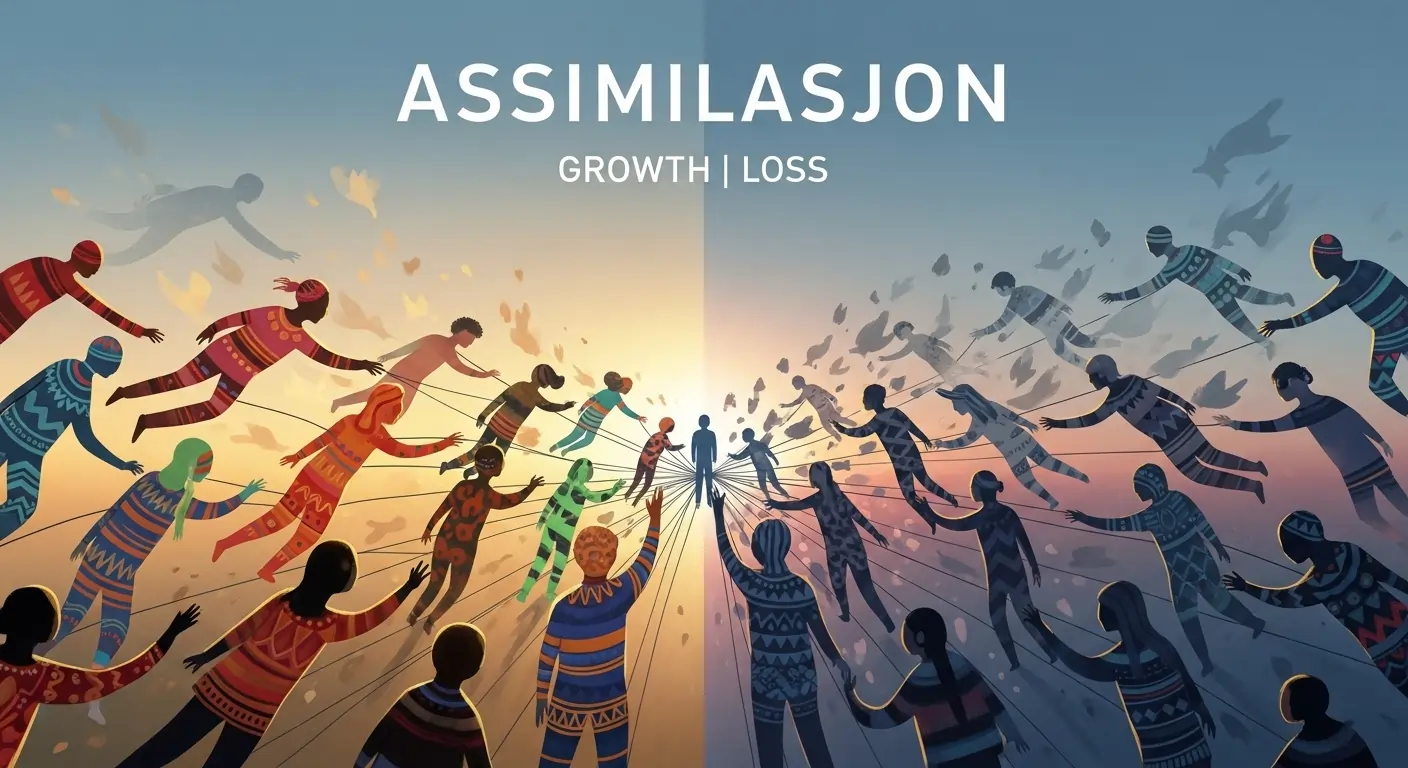
Assimilasjon is a natural, yet profoundly complex process that shapes how individuals and societies evolve. It offers opportunities for growth, communication, and unity, but it also presents the very real risks of loss and exclusion.
In understanding this interplay, we uncover the delicate balance between adapting to new environments and preserving cultural identity. It is a journey that requires courage from the individual and empathy from the community.
For a harmonious future, we must advocate for inclusive policies that celebrate diversity, respect individual choices, and promote mutual understanding. Whether in our classrooms, our boardrooms, or our neighborhoods, embracing the full meaning of assimilation helps us build resilient, empathetic, and truly unified societies.
Assimilasjon is not the end of a story—it is the beginning of a new chapter in the human narrative of belonging.